
From Dry Mortar to Wet Shotcrete: Intensive Mixer Applications You Should Know
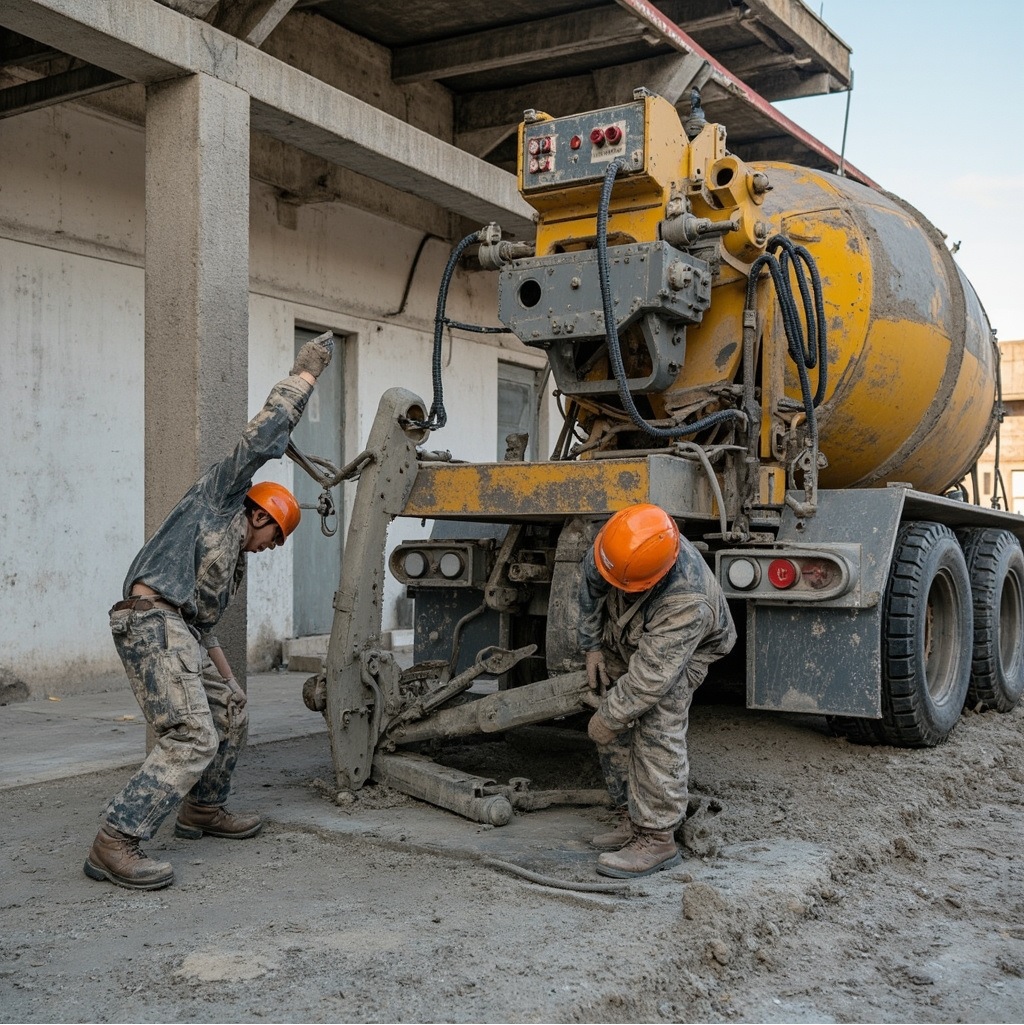 You’ve seen the piles of dusty bags on a jobsite. You’ve watched crews struggle with inconsistent batches, wasted material, and that frustrating moment when the shotcrete just won’t stick. That’s the old world—dry mortar mixed in a drum, hauled up, and prayed over. The new world? It’s wet shotcrete, and it’s only as good as the mixer behind it. If you’re still thinking of intensive mixers as just another piece of heavy machinery, you’re missing the point. They’re the silent revolutionaries of modern construction, and here’s why you should care.
Let’s start with the obvious: dry mortar is a headache. It’s dusty, it’s labor-intensive, and it leaves room for human error. You measure, you mix, you hope the consistency holds. But with wet shotcrete, you’re pumping a ready-to-use slurry directly onto the surface. The catch? That slurry needs to be perfectly homogeneous. A standard paddle mixer won’t cut it. You need an intensive mixer—something that forces every particle into submission. That’s where REFAMIX machines come in. They don’t just stir; they knead, shear, and homogenize at speeds that turn a lumpy mess into a silky, sprayable paste. The difference isn’t subtle. It’s the difference between a patch job and a permanent bond.
Think about the physics for a second. Shotcrete relies on adhesion and cohesion. If your mix has even a tiny pocket of dry cement or an uneven water distribution, you’re inviting delamination, cracking, or rebound—that wasteful spray of material bouncing off the wall. Intensive mixers eliminate that risk by creating a uniform matrix. REFAMIX models, for example, use counter-rotating tools and high-energy impact zones to break up agglomerates before they ever reach the nozzle. The result? Less waste, faster application, and a surface that holds up under pressure. For tunnel linings, swimming pools, or slope stabilization, that’s not a luxury. It’s a necessity.
But here’s the part that often gets overlooked: time. In traditional dry mortar setups, you’re mixing in batches, then transferring to a pump, then cleaning the mixer, then starting over. That’s downtime disguised as workflow. With an intensive mixer integrated into a wet shotcrete system, you’re running continuous operation. The REFAMIX design allows for rapid discharge and minimal residue, meaning you can switch between batches without losing momentum. On a large project, that shaves hours off your schedule. And time, as every project manager knows, is money.
Now, let’s talk about the material itself. Not all aggregates are created equal. Some are sharp, some are rounded, some have high moisture content. A standard mixer struggles with variability. An intensive mixer adapts. The high shear forces in a REFAMIX unit can handle everything from fine sand to coarse gravel, adjusting the mixing intensity to match the recipe. This flexibility means you’re not locked into one supplier or one mix design. You can experiment with additives, fibers, or lightweight aggregates without worrying about segregation. The mixer does the heavy lifting.
One more thing: maintenance. I’ve seen too many job sites where the mixer is the bottleneck because it’s clogged, worn out, or just plain unreliable. Intensive mixers are built differently. The wear parts are designed for longevity, and the mixing tools are accessible. REFAMIX, in particular, emphasizes easy liner replacement and tool adjustment. That might sound boring, but when your shotcrete crew is standing around waiting for a repair, you’ll appreciate the engineering.
So, what’s the takeaway? Dry mortar isn’t dead, but it’s becoming obsolete for any project that demands speed, consistency, and durability. Wet shotcrete, powered by an intensive mixer, is the smarter path. Whether you’re rehabbing a bridge, constructing a water tank, or stabilizing a hillside, the mixer you choose determines the quality of the final product. Don’t settle for a machine that just stirs. Get one that works.